
Introduction to the Tapestry Interview Series:
“Tapestries are made by many artisans working together. The contributions of separate workers cannot be discerned in the completed work, and the loose and false threads have been covered over.”
Sheldon Glashow
Even though tech is a multidisciplinary field, when many people think of tech, the first thing that comes to mind is coding and software engineering. I’ve been guilty of this myself before I joined university. But it takes more than software engineering to make the magic happen!
I get people on social media saying to me regularly, “I’m not sure how my skills can fit into tech”, “how can my CV adjust?” or “I don’t know which are the options for someone like me”. I believe that this idea of tech being only about programming is holding many talented people back from joining us in our efforts to build outstanding products and organisations.
I love to think of software projects as cultural artefacts built by many people, similar to a tapestry.
In this series of interviews, I will chat with people from design, operations, data science, tech training, product, coaching, and many more. I want to give centre stage to unsung stories and show less traditional paths into the field. Let’s start weaving.
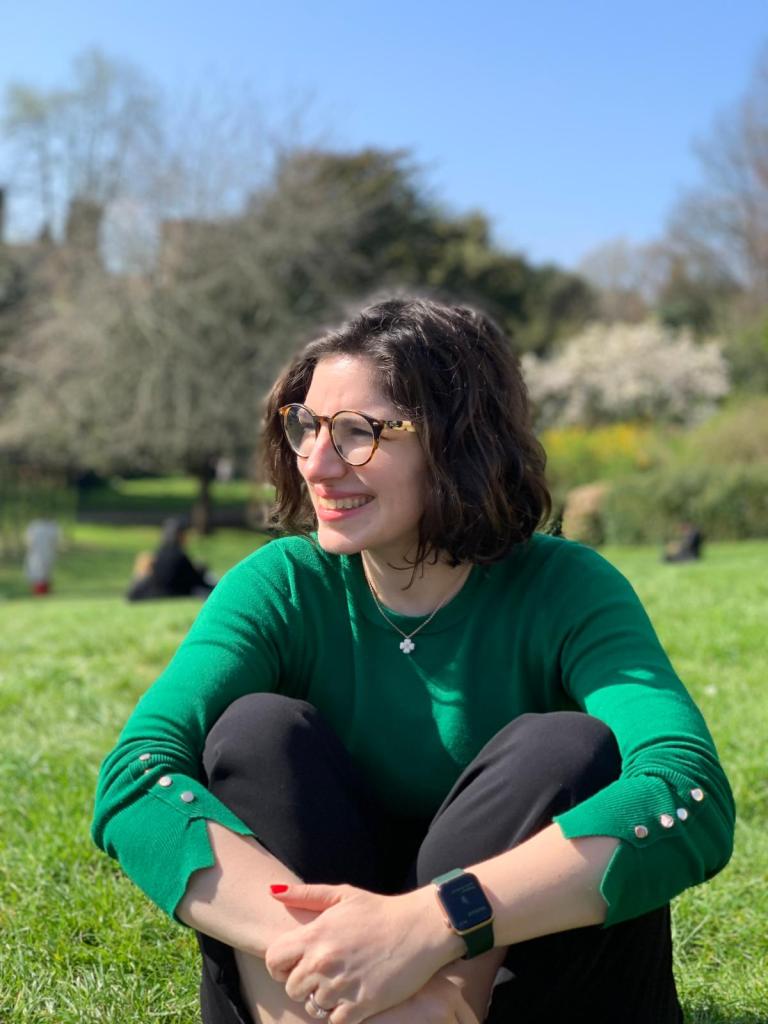
Name: Clara Cali Mella
Role: Analytics and Insight Manager
Company: Bayer
Tell me about your role and how you’d explain it to someone unfamiliar with it.
Let’s start with what a clinical trial is. If someone trying to create a drug, they need to check that said drug is working as expected, and that is done in trials. Around 50% of my work is creating the structure for those trials. For specific trials, compliance is strict, and a precise process must be followed to meet the requirements for the drug. Many clinical trials fail, not because the drug is failing but because they fail to meet the requirements of government regulatory agencies like the FDA. So we work on making the predictions as good as possible to increase the chances of success. So, for example, if you said you’ll be recruiting patients for your trial in 2 months, from the analytics team, we verify that is realistic and true because if it isn’t, your drug will be rejected. The other 50% of my work is more business-focused, answering questions like how well are we doing on the trials we’re conducting? Creating KPIs, analysing, and monitoring existing clinical trials.
What do you like the most and the least about working in data? (and by extension, working in tech)
What I like the most is that you can explain to people why they should do something and tell the story in data. Being able to explain how things are happening and how things are gonna move forward. Evidence-based decision-making! And this is something I feel many people value.
What I don’t like is that there are a lot of cases where the data is not developed in a way that matches how the data will be used in the end. Examples: a system in which people will input free text manually (there is only so much you can do with this) or systems that have been around for a while that are hard to change. Similarly, if you have a system with only 2 years of collecting data, your data only goes back two years, which is a limitation. When you start measuring something, people improve their data input, but until then, the data is unreliable because people often think, “oh this is not important”, and act accordingly.
Maybe tell me a bit about your career journey from where you started to where you’re now. I know you had quite an interesting one.
I studied philosophy initially and was interested in the logical part of the field. But I knew early on I didn’t want to go into academia which was a challenge because that is like 95% of the philosophy jobs. A bit tricky! So I started looking where I could apply what I knew and was quite open-minded. I started an operations role at Accenture, dedicated to analysing and executing the operational side of people travelling for work. When I joined, I took the approach of “let’s see what I can do and where I can add value”. I started improving some of the tools they had, automating a few things here and there. I realised that I didn’t have some of the required knowledge to write scripts or work with the data properly, so I was constantly googling and asking for help within the company!
I took some courses online, but I felt I was missing the fundamentals, and as you know, I’m someone that studied philosophy and likes the fundamentals! So I decided to continue my studies by doing a master’s in Analytics at Universidad Di Tella. It was quite funny because, during the first interview, the Director of the Masters’s program said to me, “I need to know that you know math”, to which I replied, “I don’t know math. The last time I saw a number was 8 years ago”. So he asked me to take a math exam, which I prepared for and passed. The master’s was a good experience for me. Most of the students came from a Computer Science or Economics background. The first 3-6 months were more difficult for me than the others, but I think it was worth it in the end! After my master’s, I changed teams at Accenture, starting a full-time data role. From there, I kept working on data.
What can Plato teach you about data science?
Suppose we reflect upon the allegory of the cave. Plato describes prisoners who can only look at shadows projected by objects behind them, believing those shadows to be the only real things. In data science, we often deal with similar shadows. The models and the data are not the “real things” themselves but projections of the world. But by understanding how those shadows work, we can provide a better understanding of the world itself.
Clara Cali Mella
Thinking about your journey, what advice would you give someone that might want to pursue a similar career path?
My first advice would be that if you have a different job and you find that you enjoy working with data, you should pursue it even though you don’t have the same background as someone already working on that. Once you get your first data role, you learn a lot there.
I also think, especially in Argentina, we have this tendency to think about people based on what they studied at University. But sometimes you pick a career path when you’re too young, or you change, and maybe something that was the perfect fit then is not anymore.
Also, I think there is a lot of fear about the “technical stuff” when you didn’t pursue a degree in STEM. That is something that can feel very challenging. And even though I wouldn’t say I’m an expert at coding now, when I need to do it, I do it. You learn the basics. And of course, someone that studied for 6 years in that field will be better, but that is not the point because you won’t have exactly the same role. There are many different roles, and you need to find your fit.
I believe one brings the learning acquired from other areas to wherever one goes, and that knowledge and life journey enriches whatever you’re doing today. So I wanted to ask you, do you find that your philosophy background helps you think or see things differently in your day-to-day?
I think so. Sometimes we think of non-STEM backgrounds as they are all the same, “they all read a lot, and that is that”. But philosophy is approached in a way where you don’t read as much as other degrees in the same department because we go super deep into the texts. You want to have a strong understanding of each argument. This is not that different from what you do when looking at data! You have the whole picture and want to understand it; you also want to understand the connection between the different parts, how to generate bigger ideas, etc. This is the basics of philosophy and what you would see if you go to a Philosophy 101 class to study Plato. I think this all adds plenty of value when working with data, and I use it a lot!
Any closing thoughts?
I haven’t thought about philosophy in a while. Especially what’s the impact of studying philosophy on my daily job. I think it’s more than I realise, to be honest.
Also, I value diversity, diversity in lots of ways. Working with people from different backgrounds also helps with diversity, either by coming up with different ideas or to the same one from different paths. Because of this, I think a lot of the value I add is partly because of my background.

If you have enjoyed this read and you’re interested in participating in the Tapestry Series reach out!
 giselarossi.co.uk
Leave a comment